
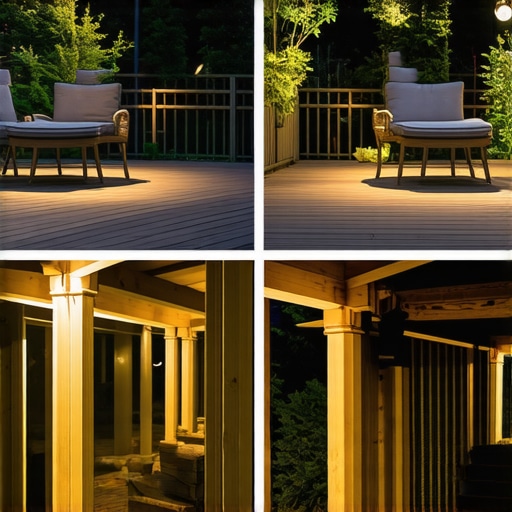
The Invisible Arcs of the Midnight Deck
I remember my first week in the trade, back when we used analog meters that weighed as much as a cinder block. My mentor, a guy who’d survived the 1970s aluminum wiring craze without losing a finger, dragged me to a porch where a homeowner had used speaker wire for a 120V floodlight. He didn’t just tell me it was wrong; he made me use my tick tracer to see how the magnetic field was bleeding through the dry wood. He’d scream, ‘You nick the copper, you create a hot spot, and you burn the family while they sleep!’ He was right. That lesson is the foundation of every lighting installation services project I touch today. By 2026, we aren’t just fighting bad wiring; we’re fighting the physics of glare and the ‘flicker’ of cheap electronics that drives the human brain into a low-grade panic. If your backyard feels like a prison yard searchlight, you don’t have a lighting problem—you have an infrastructure failure.
“Luminaires and equipment shall be listed for use in wet locations and shall be installed so that water cannot accumulate in any part of the luminaire.” – NEC 410.10(A)
Tactic 1: The Forensic Analysis of Photometric Chaos
Glare isn’t just ‘bright light.’ It’s unmanaged lumens hitting the retina at an angle the brain can’t process. In the trade, we call this the ‘blinding porch syndrome.’ Most lighting installation services just slap up LEDs and call it a day, but they ignore the kelvin creep. As LEDs age, their thermal management fails, shifting the color temperature toward a harsh, blue-white glare that ruins night vision. When I perform a virtual consultation wiring review, I’m looking at your home run. If your voltage drop is significant—say, dropping from 120V to 112V over a long run to the deck—your LED drivers are working overtime, generating heat that degrades the phosphor coating. This leads to that sickly, flickering glare. The fix? Moving toward three phase power services for commercial-grade residential estates or simply ensuring your home rewiring services include dedicated, oversized neutrals to handle the non-linear loads of modern dimming systems.
Tactic 2: Managing the Backyard ‘Load Center’
Your deck lighting shouldn’t be an afterthought tapped into the nearest outlet. By 2026, the backyard is a high-consumption zone. Between the outdoor kitchen and the inevitable EV charger installation in the nearby garage, your 200-amp panel is likely screaming for mercy. I’ve walked onto jobs where the deck lights were flickering every time the AC kicked on. That’s a sign of a loose neutral or a service entrance that can’t handle the inrush current. Upgrading to a 400 amp service entrance isn’t about vanity; it’s about providing enough ‘headroom’ so your sensitive outdoor electronics don’t die a premature death. When we install structured wiring panels, we isolate the lighting controllers from the heavy motors. This prevents ‘dirty power’ from causing your high-end landscape lights to strobe. I’ve used my Wiggy to troubleshoot panels where the bus bars were literally vibrating under the strain of unbalanced loads. Don’t be that guy.
“Aluminum wire connections can overheat and cause a fire without tripping the circuit breaker if the expansion and contraction cycles loosen the terminal screws.” – CPSC Safety Alert 516
Tactic 3: The Shielding and Optics Strategy
If you can see the light source, the design has failed. Forensic inspection of parking lot lighting teaches us that the best visibility comes from ‘cutoff’ fixtures. On a residential deck, this means using monkey shit (duct seal) to properly weather-proof the entries while installing deep-recessed optics. We use dikes to clean up the Romex in the rough-in phase, ensuring no excess jacket is left to trap moisture. For 2026, we’re seeing a shift toward ‘dark sky’ compliance. This involves using directional shielding that forces light downward. When I provide free electrical estimates, I’m looking at the reflection off your deck material. A high-gloss finish reflects light back into your eyes, creating secondary glare. We counter this by adjusting the beam spread of the fixtures—something only a pro with a light meter understands.
Tactic 4: Integration with Emergency Backups
Electricity is a fickle mistress. When the grid goes down, your deck shouldn’t go dark, especially if it’s an egress path. Integrating a generator transfer switch into your lighting plan is critical. But here’s the kicker: many portable generators produce ‘choppy’ sine waves that fry LED drivers. I’ve seen thousands of dollars in landscape lighting toasted because a homeowner tried to run their lighting installation services off a cheap construction generator during a storm. We install active power filtering and surge protection at the panel level to ensure that when the generator transfer switch flips, your backyard remains a sanctuary, not a graveyard of burnt-out diodes. It’s about the physics of the arc; if you don’t control the voltage, the voltage will control your wallet.
The Final Torque: Sleep Better When It’s Done Right
At the end of the day, you can’t fake a good electrical job. You can’t hide a loose connection with a pretty fixture. If your deck lights are buzzing, if they’re flickering, or if they’re blinding your guests, it’s a symptom of an underlying disease. Whether it’s parking lot lighting for a commercial lot or a private EV charger installation, the rules of physics apply equally. Everything needs to be torqued to spec, every Romex staple needs to be driven just enough to hold but not pinch, and every ground must be continuous. Don’t let a ‘handyman special’ turn your backyard into a fire hazard. Get a real pro, get the home rewiring services you actually need, and stop the glare before it stops you. It’s not just about seeing the stairs; it’s about making sure the stairs—and the house they’re attached to—are still there tomorrow morning.