
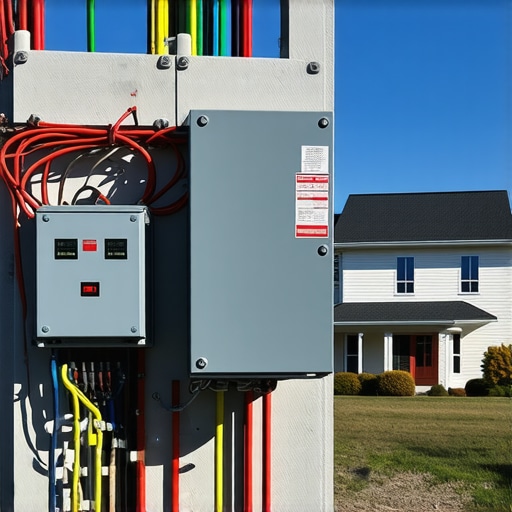
The Ghost in the Walls: Why Your 2026 Home Dreams Might Smolder
I walked into a ‘fully renovated’ 1940s bungalow last Tuesday where the new owners were complaining about a faint, rhythmic ticking sound behind the master bedroom wall. They thought it was a mouse. I pulled out my infrared camera and saw a heat signature that looked like a miniature sun. Some flipper had buried a junction box behind three layers of drywall, connecting modern Romex to old, brittle cloth insulated wiring using nothing but electrical tape and hope. The tape had dried out, the copper was oxidizing, and every time the HVAC kicked on, it was arcing. I found it by tracing the circuit back from the panel, and if I’d been an hour later, I’d have been looking at a charred foundation instead of a repair bill. This is the reality of the electrical ‘upgrades’ people are buying today.
As we move toward 2026, the demands we place on a residential electrical system are becoming astronomical. We aren’t just talking about a few LED bulbs and a toaster. We are talking about dual Level-2 EV chargers drawing 48 amps each, high-efficiency heat pumps, induction cooktops that pull massive surge currents, and ADU electrical services feeding a secondary dwelling in the backyard. The 100-amp service that served your grandfather’s house is a relic; even the 200-amp standard is starting to look like a bottleneck. The question isn’t just about capacity; it’s about the physics of heat and the integrity of your main disconnect services.
“Aluminum wire connections can overheat and cause a fire without tripping the circuit breaker.” – CPSC Safety Alert 516
The Physics of Failure: Why Your 60 Amp Panel Upgrade is Overdue
If you are still running on a 60 amp panel, you aren’t just living in the past; you’re living in a tinderbox. When you pull 55 amps through a 60-amp main, the bus bars inside that panel reach temperatures they were never designed to handle. This leads to a phenomenon called thermal cycling. The metal expands when hot and contracts when cold. Over time, this loosens the mechanical lugs holding your home runs in place. A loose connection creates resistance. Resistance creates more heat. It’s a death spiral for your equipment. When I perform infrared thermography scans, I’m looking for those ‘bright’ spots where a lug has lost its torque. In a 2026 home environment, that 60-amp service will fail the moment you plug in a modern vacuum while the dryer is running.
Transitioning from a legacy system often requires a complete cloth insulated wiring replacement. That old rag-wrapped wire wasn’t designed for the heat generated by modern continuous loads. The rubber insulation inside that cloth becomes brittle over decades; touch it, and it crumbles like a dry cracker, leaving bare copper exposed inside your walls. When we do a rough-in for a modern 400-amp service, we aren’t just swapping a box; we are re-engineering how power enters the structure to prevent this exact type of degradation.
The 400-Amp Reality: When Do You Actually Need a ‘K-Base’ or CT Cabinet?
So, does your 2026 home actually need 400 amps? To answer that, we look at the ‘Load Calculation.’ This isn’t a guess; it’s a mathematical certainty based on square footage and ‘fixed’ appliances. If you are adding an ADU (Accessory Dwelling Unit), that second kitchen and climate control system effectively double your footprint. Most restaurant kitchen electrical setups operate on high-amperage feeds because of the constant draw of refrigeration and heating elements; your modern home, with its server racks for smart automation and fast-charging vehicles, is starting to look more like a commercial kitchen than a residence. For these loads, a 400-amp service entrance—often delivered as a ‘bolt-in’ meter or using a CT (Current Transformer) cabinet—is the only way to ensure you don’t melt your service mast during a summer heatwave.
“The service disconnecting means shall have a rating not less than the load to be carried.” – NEC Article 230.79
When I’m installing these heavy-ups, I often use ‘Monkey Shit’ (duct seal) to ensure no moisture migrates from the outdoor meter can into the structured wiring panels inside. It’s a small detail, but in my 35 years, I’ve seen more panels rotted out by condensation than by actual floods. A 400-amp service typically utilizes two 200-amp sub-panels. This ‘split’ allows you to isolate ‘dirty’ loads—like a generator transfer switch or heavy machinery—from your sensitive electronics and lighting installation services.
The Forensic Inspector’s Checklist for 2026
If you are planning a build or a major renovation, don’t let a contractor talk you into ‘just enough.’ You need to think about the infrastructure context. If you’re in a mid-century home, you’re likely dealing with the ‘Cold Creep’ of old aluminum branch circuits or the nightmare of FPE panels that refuse to trip even when a circuit is glowing. I’ve seen breakers jammed by internal corrosion where I could literally see the plastic housing melting, yet the handle stayed in the ‘on’ position. That is a ‘Widow Maker’ scenario. Upgrading to a 400-amp service allows for the integration of modern AFCI (Arc-Fault Circuit Interrupter) technology, which can sense the specific signature of an arcing wire—like the one I found in that bungalow—and shut down the power before the wood ignites.
When we do the trim-out on a 400-amp system, we pay special attention to the grounding electrode system. It’s not just one rod in the dirt anymore. We’re talking ufer grounds in the foundation and supplemental rods to handle the massive potential fault currents of a 400-amp feed. I’ve used my ‘Wiggy’ (solenoid voltmeter) on enough botched jobs to know that a ‘Tick Tracer’ (non-contact voltage tester) can lie to you, but the physics of a load-bearing circuit won’t. If your 2026 home is going to be your sanctuary, don’t build it on a 1970s electrical foundation. Get the infrared thermography scans, pull the permits for that 400-amp heavy-up, and make sure every lug is torqued to spec. You’ll sleep better knowing your walls aren’t humming.