
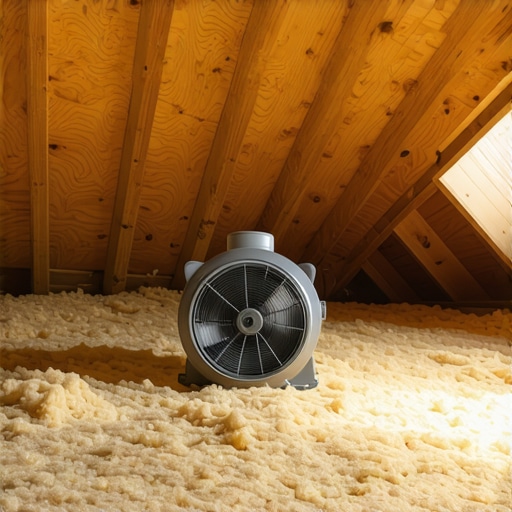
The Autopsy of a Scorched Rafter: Why Your Attic Fan is a Liability
I walked into a ‘fully renovated’ 1972 split-level last August where the owner complained the upstairs felt like a pizza oven despite a brand-new AC. I grabbed my Wiggy and a ladder. As soon as I poked my head into the scuttle hole, that familiar, acrid stench of ionizing plastic hit me. The ‘renovator’ had tapped a new attic fan directly into a 15-amp lighting circuit using nothing but electrical tape and a prayer, burying the whole mess under six inches of blown-in cellulose. I found the junction box—or what was left of it—with my Tick Tracer. The wire nuts had melted into a single glob of black slag because the fan’s startup surge was choking on a high-resistance connection. This wasn’t just a cooling failure; it was a countdown to a structure fire. This is the reality of attic ventilation in older homes: if you don’t respect the physics of Cold Creep and thermal expansion, your attempt to save on cooling costs will end in a 911 call.
“Aluminum wire connections can overheat and cause a fire without tripping the circuit breaker.” – CPSC Safety Alert 516
Fix 1: The Dedicated Home Run and Overcurrent Protection
Most DIYers and cut-rate handymen think an attic fan is a minor load. They’re wrong. An attic fan motor, especially the high-CFM models required for 2026 efficiency standards, pulls a significant inductive load. When that motor kicks over, the inrush current can be three to five times the running amperage. If you’ve tapped into a bedroom circuit, you’re asking for a voltage drop that destroys electronics and heats up every marginal connection in the loop. To truly cut costs and stay safe, you need a dedicated Home Run. This means pulling a fresh 12/2 Romex line from the panel to the fan. This bypasses old, brittle insulation in the walls and ensures the fan isn’t competing with your vacuum cleaner or permanent holiday lighting for juice. Furthermore, modern NEC code updates demand that these motors have specific lockout disconnects within sight of the unit. If I’m up there working on a seized blade, I don’t want a homeowner flipping a switch downstairs and turning my Dikes into a welding torch.
Fix 2: Resolving the Aluminum ‘Cold Creep’ at the Terminals
In homes built between 1965 and 1978, you’re likely dealing with aluminum branch wiring. The physics here are brutal. Aluminum has a much higher coefficient of thermal expansion than copper. Every time that fan cycles on and the attic hits 140 degrees, the wire expands. When it cools, it contracts. Over hundreds of cycles, the wire actually ‘creeps’ out from under the terminal screws of the fan’s thermostat. This creates a micro-gap. Electricity, being the lazy, violent force it is, jumps that gap. That arc generates heat in excess of 3,000 degrees Fahrenheit, which carbonizes the surrounding wood. If your home has this wiring, you cannot simply screw the wire to the fan. You must use warranty backed repairs involving AlumiConn connectors or COPALUM crimps to transition to copper pigtails. Without this, your ‘cost-saving’ fan is just a giant tinderbox starter. When we perform a meter base replacement or a panel heavy-up, we often find these attic circuits are the most degraded due to the extreme heat cycles they endure.
“The removal of heat from an attic space shall not compromise the electrical integrity of the branch circuit or create a pressure differential that back-drafts combustion appliances.” – NFPA 70-2023 Section 422
Fix 3: The Thermostat Calibration and Contact Pitting
A faulty humidistat or thermostat is the primary reason attic fans fail to lower cooling costs. Most stock controllers use a cheap bimetallic strip that loses its ‘spring’ after two seasons of Missouri humidity or Texas heat. When the contacts get ‘sticky,’ they don’t snap open or shut; they chatter. This chatter creates pitting on the contact surfaces, increasing resistance and heat. If you hear a buzzing sound coming from your attic, that’s the sound of air being turned into plasma. A forensic inspection often shows these controllers melted into the rafters. We recommend upgrading to a solid-state digital controller. While you’re at it, ensuring you have permit pulling services for these upgrades isn’t just about red tape; it’s about ensuring your insurance company doesn’t ghost you if the worst happens. If you’re also running a pool pump electrical system or considering a standby generator install, your total load calculation needs to account for this fan’s continuous run-time during peak summer months.
Fix 4: Sealing the Penetrations with ‘Monkey Shit’ and Proper Shielding
Efficiency isn’t just about moving air; it’s about where the air comes from. If the electrician who installed your whole house fan wiring didn’t seal the penetrations, the fan will simply pull cold air out of your living room through the wall cavities and light fixtures. This is where we use Monkey Shit (duct seal) or fire-rated expandable foam. You must create a hard barrier between the conditioned space and the attic. Additionally, considering flood water electrical safety, ensure all roof penetrations for fan vents are flashed and sealed with high-temp silicone. A leak onto a live motor is a recipe for a ground fault that could energize your entire gutter system. If you have a generator transfer switch, make sure the attic fan is on the non-essential load side unless you have a massive kVA rating, as these fans can hog the limited current needed for your fridge and lights during a summer blackout. Finally, if you’re dealing with a service upgrade, don’t ignore the meter base replacement; a corroded lug at the meter can cause the voltage sags that burn out attic fan motors prematurely.
Reading through this detailed breakdown of attic fan issues really highlights how critical proper electrical practices are for home safety and efficiency. I’ve personally seen cases where a DIY installation, similar to what was described—tapped directly into a lighting circuit with duct tape—almost caused a fire. It’s a stark reminder that these seemingly simple upgrades can become major hazards if not done right. What caught my attention was the discussion about aluminum wiring and the thermal creep problem. I’ve replaced a few aluminum circuits with COPALUM crimps because I know firsthand how dangerous micro-gaps can be, especially in high-temperature environments like attics.
Given your emphasis on sealing penetrations with ‘Monkey Shit’ and high-temp silicone, do you recommend any particular products or techniques that work best for sealing around attic vents? I’ve found that using fire-rated expandable foam combined with metal flashing provides a good seal, but I’d love to hear if there are newer, better solutions out there. Also, do you think smart thermostats are worthwhile upgrades here, or do they still suffer from the contact pitting problem? It’s just fascinating how much attention to detail is needed to ensure these fans effectively lower cooling costs without creating fire hazards.
This post really underscores the importance of proper electrical practices and sealing techniques for attic fans. I’ve seen firsthand how a simple bypass or unsealed penetration can lead to significant energy losses and safety hazards. The use of fire-rated expandable foam and high-temp silicone, as you mentioned, makes a big difference in preventing conditioned air from escaping and in discouraging fire risks. When it comes to sealing around attic vents, I’ve personally found that combining metal flashing with high-temp silicone offers a very durable and effective barrier. As for products, I recommend FireStop XL or Foam-iT! 2 Fireblock Sealant—both are designed specifically for high-temperature applications and are highly rated for longevity.
Regarding thermostats, I agree that upgrading to solid-state models helps avoid the contact pitting issues of traditional mechanical ones. Do you find that smart thermostats with Wi-Fi capabilities are compatible with these more advanced controllers? For homeowners considering these upgrades, what would be your advice on integrating them safely and effectively? It’s clear that attic fan installations require meticulous attention to detail to ensure safety, efficiency, and longevity, especially in older homes with aluminum wiring and outdated infrastructure.