
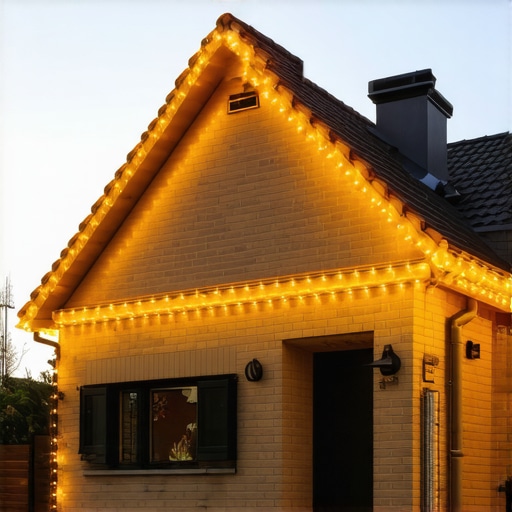
The Ghost in the Service Panel: A Mid-Century Warning
It starts with a faint, metallic tang in the air—ozone. You might think it is just the smell of an old furnace kicking on, but as a forensic inspector who has spent 35 years poking a Wiggy into the guts of 1970s ranch homes, I know better. That smell is the sound of money burning and safety evaporating. Your 1960s-1980s home was built for a different era, one where a single 60-amp service was plenty for a toaster and a few incandescent bulbs. Now, as we look toward 2026, you are thinking about permanent holiday lighting. But before you zip-tie a single LED to your eaves, you need to understand the structural reality of your home. My old journeyman used to grab my wrist so hard it bruised if he saw me reaching for a wire without my Tick Tracer in my pocket. ‘It’s not the volts that kill you, kid,’ he’d growl, ‘it’s the complacency.’ He was right. Most people see holiday lights as a cosmetic upgrade. I see them as the final straw for a 60 amp panel upgrade that should have happened twenty years ago.
“Aluminum wire connections can overheat and cause a fire without tripping the circuit breaker.” – CPSC Safety Alert 516
1. Eliminating the ‘Ladder Lottery’ and Overloaded Circuits
The first benefit of permanent holiday lighting is the most obvious: you stop climbing ladders. But from my perspective, the real benefit is the elimination of the ‘Handyman Special’ extension cord nightmare. Every December, I see homeowners daisy-chaining Romex scraps and orange outdoor cords into a single 15-amp outlet. In a mid-century home, that outlet is likely fed by aluminum wiring. Here is the physics: aluminum has a high coefficient of thermal expansion. It undergoes Cold Creep. Every time your lights cycle on, the wire heats up and expands. When they turn off, it contracts. Over time, the wire pulls away from the screw terminal on the outlet. This creates a high-resistance gap. Current jumps that gap, creating a micro-arc that reaches 1,100 degrees Fahrenheit. If you have a Federal Pacific or Zinsco panel, those breakers are notorious for ‘jamming’—they won’t trip even when the wire is melting the insulation. Moving to a permanent, professionally installed system allows an electrician to run a dedicated Home Run to a new subpanel installation, bypassing the fragile legacy wiring altogether.
2. Meter Socket Integrity and Weatherproofing
When we install permanent lighting, we aren’t just looking at the roofline; we are looking at where the power enters your home. If you are still running on an original mid-century service, your meter socket replacement is likely overdue. I’ve opened meter cans in the Midwest where the lugs were so corroded from moisture ingress that they looked like green cauliflower. We use Monkey Shit (duct seal) to prevent air exchange between the warm house and the cold exterior, but in older homes, that seal has long since turned to stone. A permanent lighting upgrade is the perfect time to address the ‘Widow Maker’—that rusted-out service mast. Upgrading to a modern meter socket ensures that the increased load of a fully automated 2026 smart home doesn’t cause a catastrophic failure at the point of entry. It’s about more than lights; it’s about ensuring the three phase power services or standard 240v split-phase can actually handle the continuous duty of modern electronics.
“The arc-fault circuit interrupter (AFCI) is a device designed to provide protection from the effects of arc faults by recognizing characteristics unique to arcing.” – NFPA 70: National Electrical Code (NEC)
3. Thermal Management and the Subpanel Advantage
Why do I insist on a subpanel installation for permanent lighting? Because of harmonic distortion and heat. Modern LED drivers are switching power supplies. They can introduce noise back into your home’s electrical system, which plays havoc with your home theater wiring. If your theater’s high-end amplifiers are on the same phase as a cheap LED driver, you’ll hear it in the speakers. By isolating the lighting load, we protect your sensitive electronics. Furthermore, we can integrate financing electrical upgrades to cover a full 200-amp transition. This isn’t just about ‘upselling’; it’s about the fact that your 1970s bus bars are likely pitted and oxidized. I’ve seen breakers that were literally welded to the bus bar because of micro-arcing. A new panel with AFCI protection means that if a squirrel chews on your permanent lighting wire three years from now, the breaker actually trips instead of letting the wire glow red-hot inside your soffit.
4. Resilience via Standby Generator Integration
By 2026, home resilience will be a primary metric for property value. Permanent holiday lighting systems are low-voltage and high-efficiency, making them the perfect candidate for a home backup generator install or a standby generator install. When the grid goes down in a winter storm, a properly configured 100-amp or 200-amp transfer switch allows you to maintain security lighting and festive aesthetics without boggling down the engine. During a forensic inspection after a local blackout, I found a house where the owner tried to back-feed his panel with a male-to-male cord—a ‘suicide cord.’ Don’t be that guy. Integrating your lighting into a managed load system during a 60 amp panel upgrade ensures that your essentials (fridge, furnace) and your comforts (lights) stay on safely. We often offer senior discount services for these types of safety-first installs, as keeping seniors off ladders and ensuring their backup power is automated is a life-saving measure.
5. Future-Proofing for 2026 and Beyond
The final benefit is the peace of mind that comes from a trim-out that is code-compliant. We aren’t just slapping LEDs on your gutters; we are checking the grounding electrode system. Most 1950s homes rely on a single cold-water pipe ground that has probably been broken by a plumber installing PEX. We drive two new ground rods, 8 feet deep, 6 feet apart. We ensure the meter socket replacement is bonded correctly. This foundational work is what allows for financing electrical upgrades to be a wise investment rather than a sunk cost. When I finish a job, I want to know that I could put my own grandkids to sleep in that house. I want to see the torque marks on every lug. When you look at your house in 2026, glowing perfectly with permanent lights, you shouldn’t just see ‘pretty.’ You should see a home that has been dragged out of the fire-trap era and into the modern age. It is about the physics of resistance, the reality of thermal load, and the refusal to let a ‘Handyman Special’ dictate your family’s safety. Get the electrician, get the permit, and get it done right.