
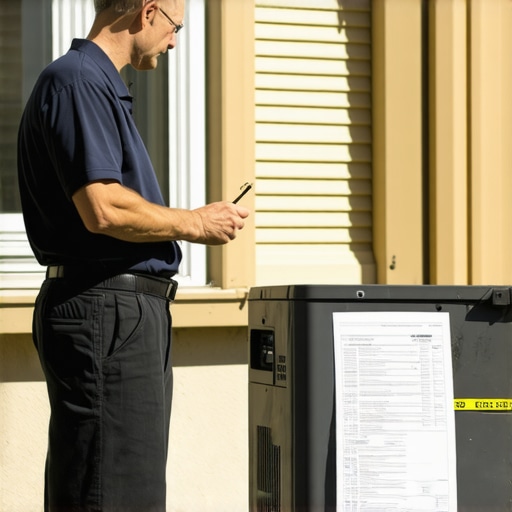
The Price of a Nicked Wire: An Old Timer’s Lesson
My journeyman used to smack my hand if I stripped a wire with a knife. ‘You nick the copper, you create a hot spot,’ he’d scream. He was right. That microscopic gouge in the conductor is a bottleneck for electrons; it increases resistance, generates heat, and eventually, under the heavy draw of a standby generator, it becomes the point of failure that burns a house to the ground. In the world of forensic electrical inspection, I don’t see many ‘accidents.’ I see consequences. When you are prepping a 2026 standby generator installation, you aren’t just hooking up a motor; you are integrating a miniature power plant into a legacy system. If that system is a 1940s colonial with crumbly insulation, your generator isn’t a luxury—it is a liability. You might think your installation is ‘fine’ because the lights stayed on during the last storm, but if you haven’t checked the following four codes, you are sitting on a ticking thermal bomb.
The Physics of Failure: Why Your Panel is Screaming
Electricity is lazy, but it is also relentless. When your automatic transfer switch (ATS) kicks in, it creates a massive inrush of current. This is where ‘Component Zooming’ becomes vital to understand. Inside your main breaker panel, the mechanical lugs holding your service entrance cables are subject to something called thermal cycling. Every time a heavy load like a level 2 EV charger or a 22kW generator starts, the metal expands. When it stops, it contracts. Over decades, this microscopic movement leads to ‘Cold Creep.’ The connection loosens, oxidation forms a thin layer of resistive film, and suddenly that lug is radiating heat at 300 degrees Fahrenheit. I’ve seen panels where the bus bar was so pitted from arcing that the breaker literally welded itself to the rail. You cannot simply slap a generator onto an old 100-amp service without performing a full load calculation. This isn’t a suggestion; it is the law of physics and the law of the NEC.
“The disconnecting means for all sections shall be grouped and shall be identified as the service disconnect.” – NEC 225.34
If you have temporary power services or a mess of battery backup wiring feeding your home theater wiring, you are likely violating the ‘six-disconnect rule’ or failing to properly group your service shut-offs. In 2026, inspectors are looking for a single point of entry and a clear, labeled path for emergency responders. If they see a bird’s nest of Romex hanging off your joists, they won’t just fail your generator—they’ll pull your meter.
1. The Neutral-Ground Bond: The Silent Killer
The most common forensic failure I find in standby systems is a ‘bootleg ground’ or an improper neutral bond. When you install a generator, you have to decide if it’s a ‘Separately Derived System.’ If your transfer switch switches the neutral, you need a grounding electrode at the generator. If it doesn’t, and you bond the neutral to the frame of the generator while it’s still bonded in the main panel, you’ve created a parallel path. Now, the normal return current isn’t just staying on the neutral; it’s flowing through the metal skin of your generator, through your gas lines, and through your deck lighting services. I once used a Wiggy (solenoid voltmeter) on a client’s outdoor faucet and found 40 volts of stray current because their generator was improperly bonded. It’s a widow-maker. You need to ensure your rough-in phase includes a dedicated grounding rod for the unit, driven eight feet into the earth, with a resistance-to-ground of 25 ohms or less. Don’t trust the dirt; use a fall-of-potential tester.
2. Load Shedding and Ohm’s Law: The 2026 Standard
In 2026, the NEC has cracked down on ‘undersized’ generators. You can no longer legally install a 10kW generator on a house with a 5-ton AC unit unless you have an automated load management system. This isn’t just about the generator stalling; it’s about voltage sag. When the voltage drops because the generator is struggling, the amperage spikes. Higher amperage means higher heat. This is how you fry the sensitive electronics in your data center power setup or your high-end speaker system setup. A warehouse lighting retrofit uses LEDs to save energy, but a residential home is still a monster of inductive loads. Your annual maintenance contracts should include a load bank test to ensure the unit can actually handle its nameplate rating without dropping below 108 volts. If you’re pushing a home run of #6 AWG copper over a 100-foot span to a subpanel, you better account for voltage drop, or your level 2 EV charger will melt the insulation right off the copper before the breaker even thinks about tripping.
3. The Integrity of the Enclosure: Salt, Ozone, and Corrosion
If you live near the coast or even in a humid valley, your generator’s enclosure is a chemical plant. I’ve seen ‘stainless’ enclosures that looked like Swiss cheese after three years because the installer didn’t use dielectric grease on the terminals. Salt air bridges the gap between phases, creating micro-arcs that smell like ozone and leave behind a carbon track. Once a carbon track is established, the plastic components of your ATS become conductive. This is how ‘flashovers’ happen. I’ve opened ATS cabinets that looked like a grenade went off inside because a spider web collected enough salt and moisture to bridge the 240-volt bus. When doing your trim-out, use ‘Monkey Shit’ (duct seal) to plug the conduits entering the house. If you don’t, the warm air from the house meets the cold air in the generator, creates condensation, and drips water directly onto your battery backup wiring. It’s a rookie mistake that costs five figures to fix.
4. Clearance and Carbon Monoxide: The NFPA 37 Conflict
Code isn’t just about wires; it’s about breath. NFPA 37 requires generators to be five feet from openings (windows, doors, vents). Many ‘handymen’ ignore this, placing the unit right under a soffit vent. The generator’s exhaust is rich in CO, which gets sucked into the attic and down into the bedrooms. I’ve been to scenes where the homeowners were lucky to wake up. Furthermore, the 2026 codes emphasize the proximity to combustible walls. If your generator is closer than 18 inches to a wall, it better have a fire-rated assembly. I’ve seen vinyl siding melt and drip like wax because a generator was running a full load for three days straight during a blackout. Use your dikes to clip back any overhanging branches, and make sure your retail store wiring or residential install doesn’t put the generator in a ‘confined space’ where heat can’t dissipate.
“Aluminum wire connections can overheat and cause a fire without tripping the circuit breaker.” – CPSC Safety Alert 516
While most generators use copper for the internal windings, the feeders are often aluminum to save cost. If you don’t use a UL-listed oxide inhibitor and torque those lugs to the exact inch-pound specification written on the door, you are inviting a fire. A tick tracer (non-contact voltage tester) won’t tell you if a lug is loose, but a thermal imager will. Every annual maintenance contract should involve a thermal scan of the lugs under load.
Conclusion: Electricity Isn’t a Hobby
Whether you are managing a warehouse lighting retrofit or just trying to keep your fridge running during a hurricane, the rules are written in blood. The 2026 codes are more stringent because our homes are more electrically dense than ever. Between data center power setups in home offices and the massive draw of an EV charger, our infrastructure is screaming for mercy. Don’t be the guy I have to visit with a forensic kit and a camera to document why the house is a pile of ash. Torque your lugs, bond your grounds, and for heaven’s sake, keep your hands off the Romex unless you know exactly what you’re doing. Sleep at night knowing your system is torqued, tested, and totally legal.
This post really drives home the importance of proper installation and ongoing maintenance for standby generators, especially as our electrical loads increase with EVs and smart home systems. From personal experience, I once worked on a system where a simple loose lug caused intermittent breaker trips and heated connections — not immediately obvious until we did a thermal scan. It’s a stark reminder that even small oversights can escalate into major hazards over time. I’ve always wondered, what are some cost-effective tools or routines homeowners should incorporate into their annual checkups to catch these issues before they become dangerous? Regular thermal imaging seems ideal, but is there an easier way for the average DIYer to monitor these critical connections?