
The Ghost in the Walls: Why 60 Amps is a Fire Waiting to Happen
If you are still running your household on a 60-amp service in 2026, you aren’t just living in a vintage home; you are living inside a slow-motion arson attempt. I’ve spent over three decades dragging my tool belt through crawlspaces and sniffing out the distinct, metallic ozone smell of a panel that’s about to liquefy, and let me tell you—physics does not care about your ‘it’s worked fine for years’ excuse. We aren’t in 1954 anymore. Back then, a ‘heavy load’ was a toaster and a black-and-white television. Today, between your high-speed networking, your heat pumps, and that [standby generator install] you’re considering, a 60-amp panel is a choke point that’s generating heat every second of the day.
“Aluminum wire connections can overheat and cause a fire without tripping the circuit breaker.” – CPSC Safety Alert 516
The Forensic Evidence: A ‘Fully Renovated’ Deathtrap
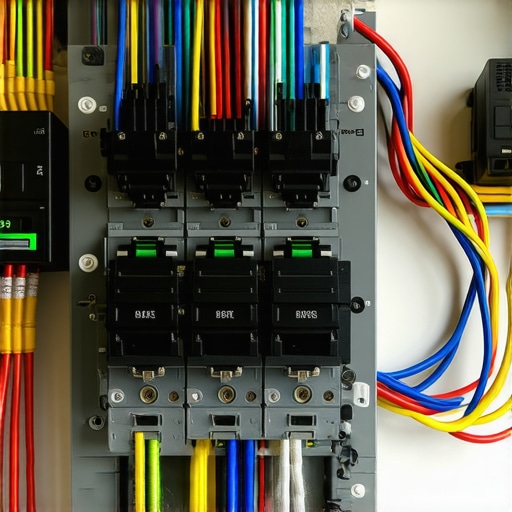
I walked into a ‘fully renovated’ kitchen last year where the flipper had spent fifty grand on quartz countertops and subway tile but kept the original 1950s 60-amp service. They had literally buried live junction boxes behind the backsplash to hide the mess. I found them because my tick tracer started screaming through the grout. When I finally pulled the cover off the main panel in the garage, the heat was so intense I could feel it through my leather gloves. The main lug was discolored—a deep, bruised purple—meaning it had been operating at near-melting temperatures for months. This is the reality of outdated infrastructure. You can paint the walls all you want, but if your [electrical wiring services] are rotting from the inside out, the house is a ticking time bomb.
Reason 1: The Physics of Thermal Fatigue and ‘Cold Creep’
Let’s talk about why these old panels fail. It’s not just about ‘too much power’; it’s about the chemistry of the metal. In 60-amp panels from the mid-century era, we often see aluminum feeders or poorly alloyed copper bus bars. Over decades, every time you turn on a heavy appliance, the wire heats up and expands. When you turn it off, it cools and contracts. This is called ‘Cold Creep.’ Eventually, the connection at the breaker or the main lug loosens just a fraction of a millimeter. That gap creates resistance. Resistance creates more heat. I’ve seen lugs that were never properly torqued—or have loosened over forty years—become so hot they weld themselves to the bus bar. By the time you notice your lights flickering, the inter-crystalline corrosion has already compromised the integrity of the home run.
Reason 2: Modern Life vs. Ohm’s Law
Your 60-amp panel was designed for a 1,200-square-foot house with no air conditioning. In 2026, even a modest home requires [electrical wiring services] capable of handling 200 amps. When you try to pull 55 amps of continuous load through a 60-amp main, you are operating at the absolute edge of the safety margin. If you’ve added [low voltage lighting] in the yard or a [PA system installation] for your media room, you are pushing the limits. The NEC is clear about load calculations, and most modern inspectors will fail a house on sight if it hasn’t been upgraded to accommodate modern demand. You can’t just slap a bigger breaker in there; that’s how you turn your Romex into a heating element inside your walls.
“The service disconnecting means shall have a rating not less than 100 amperes, 3-wire…” – NFPA 70, National Electrical Code (NEC) 230.79(C)
Reason 3: The Insurance Blacklist and Liability
If you think your homeowner’s insurance is going to cover a fire caused by a Federal Pacific or Zinsco 60-amp panel in 2026, think again. Carriers are now using [augmented reality troubleshooting] and remote inspections to flag high-risk properties. A 60-amp service is a massive red flag. They see it as a pre-existing condition. Upgrading is no longer just about convenience; it’s about maintaining the insurability of your asset. While you’re at it, getting a [surge protector installation] at the new panel level is the only way to protect your sensitive electronics from the dirty power often found in aging grids.
Reason 4: The Safety Gap (AFCI and GFCI Integration)
Old 60-amp panels are ‘dumb.’ They don’t have the space or the bus bar configuration for Arc-Fault Circuit Interrupters (AFCI). An AFCI can detect the signature of a wire sparking behind a wall—something a standard old-school breaker will ignore until the house is already on fire. When we do a panel heavy-up, we don’t just swap the box. We integrate [smoke detector installation] into the hardwired system and ensure every branch circuit is properly grounded. We check the rough-in and the trim-out to ensure there are no ‘widow makers’—those lethal bootleg grounds where a lazy tech tied the neutral to the ground screw because they didn’t want to pull a new wire. If you’re managing a commercial space, this is even more critical for [emergency exit lighting] compliance and [annual maintenance contracts].
The Verdict: Torque It Down and Sleep Better
Electricity isn’t a hobby, and it isn’t something you ‘save for later.’ When I finish a 200-amp upgrade, I use a torque wrench to ensure every single lug is set to the manufacturer’s inch-pound specification. I check it with a Wiggy to ensure there are no phantom voltages. It’s about more than just having enough juice to run your dishwasher and your EV charger at the same time. It’s about knowing that when you close your eyes at night, the metal inside your walls isn’t glowing cherry red. Don’t wait for the smell of burning plastic to call for help. Get the upgrade, get a [sign lighting installation] that actually works, and treat your home’s electrical system with the respect it demands. Your family’s safety is worth more than the cost of a few copper bus bars.