
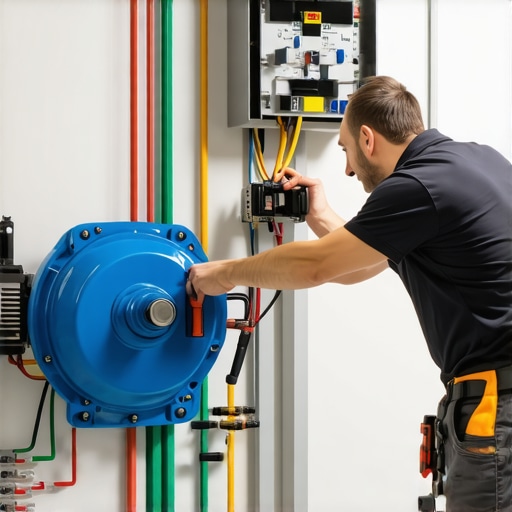
The Autopsy of a Tripping Pool Breaker: Why Your Backyard Oasis is Shunting to Ground
You hear that muffled thunk from the side of the house? That’s not just a breaker tripping; that’s the sound of a mechanical failure screaming for a forensic investigation. By the time you’re standing over your subpanel in your flip-flops, wondering why the filter stopped, the damage is usually already done. After thirty-five years of pulling widow makers out of wet soil and seeing the aftermath of ‘handyman specials,’ I can tell you that a pool pump tripping a breaker in 2026 isn’t a mystery—it’s physics. We are moving into an era where the National Electrical Code (NEC) is tighter than ever, and your old equipment is struggling to keep up with the demands of modern energy storage systems and home automation setup requirements. If you think a quick reset is the solution, you’re just waiting for the smell of ozone to turn into the smell of a structure fire.
The Old Timer’s Lesson: The Sin of the Nicked Copper
My first journeyman, a guy we called ‘Grizzly’ Pete, used to carry a heavy brass Wiggy and a temperament to match. I remember one humid July morning in 1989; I was rough-ining a pump house and used a pocket knife to strip the insulation off the 12-gauge home run. Pete grabbed my wrist so hard I thought he’d snap it. ‘You nick that copper, kid, you create a hot spot,’ he growled. ‘In a year, that nick becomes a point of resistance. Resistance creates heat. Heat causes expansion. Eventually, that wire will vibrate itself right out of the lug or burn through the terminal.’ He was right. Most of the ‘ghost trips’ I investigate today are the result of poor workmanship from decades ago. Whether it’s a nicked conductor or a loose neutral, the electricity eventually finds a way to escape the path you’ve built for it. When we talk about fire damage wiring restoration, we are usually talking about the final result of a ‘minor’ mistake made during the initial rough-in.
“Aluminum wire connections can overheat and cause a fire without tripping the circuit breaker.” – CPSC Safety Alert 516
Fix 1: The Forensic Capacitor Overhaul and Dielectric Breakdown
The most common culprit for a 2026 breaker trip isn’t the breaker at all—it’s the start capacitor inside the motor bell. Inside that little cylinder, you have thin layers of conductive foil separated by a dielectric material. Over time, the heat from the sun and the constant cycling causes the dielectric to degrade. This is called dielectric breakdown. When the capacitor fails to provide that initial phase shift needed to kick-start the motor, the pump draws locked-rotor amperage (LRA). We’re talking 50 to 80 amps on a circuit designed for 20. Your breaker does its job and trips. But here’s the forensic part: if you just replace the capacitor without checking the windings with a megohmmeter, you’re missing the ‘why.’ A failing capacitor often masks scorched internal windings. I’ve seen electricians swap a cap only to have the motor melt down a week later because the insulation on the copper coils was already brittle. Don’t just swap parts; test the resistance to ground. If you’re seeing anything less than 2 megohms, that motor is a boat anchor.
Fix 2: Managing the ‘Inductive Kickback’ in Home Automation
We are seeing a massive surge in home automation setup integration for pools. You want to turn on your heater and pump from an app while you’re at work. The problem? Smart relays and automated controllers often use solid-state switching that can be sensitive to the inductive kickback of a large motor. When a pool pump shuts off, the collapsing magnetic field in the motor windings sends a spike of voltage back up the line. In older systems, this was absorbed by the heavy iron of the transformer or just dissipated. In 2026, this spike can confuse or damage GFCI breakers, causing ‘nuisance’ trips. The fix here is a snubber circuit or a properly rated motor contactor that can handle the arc-quenching. If your electrician isn’t talking about surge suppression at the equipment pad, they aren’t preparing you for the future of energy storage systems. You need a dedicated path for that transient voltage that doesn’t involve your sensitive electronics.
“The grounding electrode conductor shall be protected from physical damage by being enclosed in rigid metal conduit, intermediate metal conduit, rigid polyvinyl chloride conduit (PVC)…” – NEC Article 250.64
Fix 3: Remediating Underground Corrosion and Trenching Failures
If your pump trips specifically after a heavy rain, the autopsy points to the trenching electrical conduit. I’ve dug up ‘waterproof’ PVC runs that were filled with a nasty slurry of brackish water and monkey shit (duct seal) that had failed years ago. Water is the ultimate solvent. If you have any cloth insulated wiring replacement needs that were ignored during a 1990s remodel, that moisture will bridge the gap between the hot leg and the grounded conduit. This creates a high-impedance ground fault. It’s not enough to trip the breaker instantly, but it generates enough heat to eventually cause a thermal trip. The only real fix is trenching electrical conduit properly—using Schedule 80 PVC, buried at least 18 inches deep (or 24 inches if you’re under a driveway), and pulling fresh THWN-2 conductors. While you’re at it, don’t try to save a buck by skipping the permit pulling services. An inspector’s second pair of eyes is what keeps your family from getting a 120-volt surprise while they’re reaching for the skimmer basket.
Fix 4: Harmonic Distortion and the Modern Load Profile
The 2026 electrical grid is ‘dirtier’ than it used to be. With energy storage systems (like home batteries) and permanent holiday lighting controllers everywhere, the sine wave of your electricity is often distorted by harmonics. Variable Speed Pumps (VSPs) are great for saving money, but their internal drives are notorious for generating high-frequency noise. This noise can ‘trick’ a modern GFCI breaker into thinking there’s a current imbalance. To stop these trips, we often have to install EMI filters or ensure that the pump has a dedicated home run back to the main panel, completely isolated from other loads like driveway sensor lights or commercial electrical services equipment nearby. If you’re still using a tick tracer to diagnose these issues, you’re flying blind. You need an oscilloscope to see the ‘noise’ that’s killing your uptime. When we perform commercial electrical services, this is standard protocol; residential systems are finally catching up to that level of complexity.
Final Verdict: Respect the Amps
Electricity doesn’t care about your weekend plans. It follows the path of least resistance, and if that path leads through a corroded lug or a damp piece of cloth insulated wiring, it will take it. Stop looking for a ‘reset’ and start looking for the forensic evidence of failure. Whether it’s trenching electrical conduit to replace a collapsed line or finally handling that fire damage wiring restoration you’ve been putting off, do it right. Use your dikes to cut out the rot, torque your lugs to the manufacturer’s specs, and for the love of all that is holy, keep your home automation setup isolated from your motor loads. You’ll sleep better knowing the only thing humming in your backyard is the pump, not the panel.