
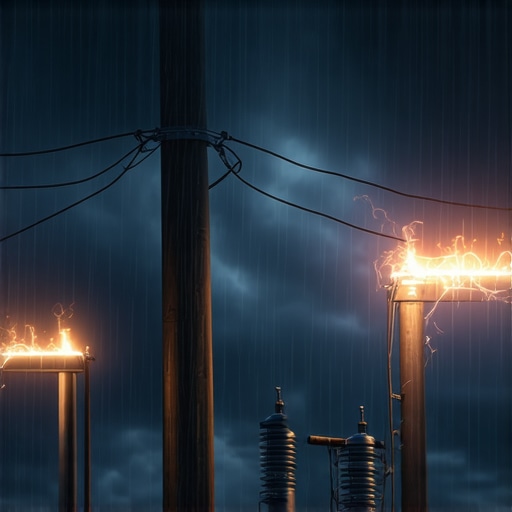
The Aftermath: Why Most Post-Storm Electrical Inspections Fail
The wind has died down, the sky is clear, and the cleanup has begun. Most homeowners look for missing shingles or broken windows, but they ignore the silent killer lurking behind their drywall. As a master electrician with over three decades in the trade, I’ve seen the 2026 storm season rewrite the rules of residential safety. We aren’t just dealing with water anymore; we are dealing with high-velocity vibration and micro-fractures in aging copper. When the grid fluctuates during a major event, your electrical system takes a beating that a simple visual check won’t reveal. I’ve walked into homes three weeks after a storm where the family was breathing in ozone and didn’t even know it. If you smell something like a burnt match or a dead fish near your outlets, your house isn’t just dirty—it’s preparing to ignite.
“Aluminum wire connections can overheat and cause a fire without tripping the circuit breaker.” – CPSC Safety Alert 516
The Old Timer’s Lesson: The Nick That Costs a House
My old journeyman used to smack my hand with his pliers if he saw me stripping a wire with a pocket knife. ‘You nick the copper, you create a hot spot,’ he’d scream so loud the whole rough-in crew would stop. He wasn’t just being a cranky old man. He understood the physics of Stress Concentration. When a storm-force wind rattles your service mast for ten hours straight, every single nick or loose connection in your system becomes a point of extreme resistance. That resistance generates heat. That heat causes the copper to expand and contract, a process known as Thermal Cycling, which eventually leads to a terminal failure. In the 2026 storms, we saw the results of ‘handyman specials’—nicked conductors that literally snapped inside the insulation, creating an invisible arc fault that would bypass a standard breaker. This is why weekend electrician services are swamped; they are out there hunting for these hidden fracture points before they turn into 2:00 AM structure fires.
Sign 1: The Vibrational ‘Hum’ and Meter Base Fatigue
The first thing I check after a storm is the service entrance. Most people think the meter is just a glass box that records their bill. To me, it’s a forensic record of the house’s health. High winds exert hundreds of pounds of lateral force on your service mast. This force is transferred directly to the lugs inside your meter can. If those lugs have even a fraction of an inch of play, the resulting arc will begin to liquefy the bus bar. This is where a meter base replacement becomes non-negotiable. I use my Wiggy to check for voltage drops across the main lugs; if I see a deviation of more than a few volts, I know that salt-laden moisture has already started a Galvanic Reaction. The salt acts as a bridge between phases, creating a high-impedance short that doesn’t trip the main but slowly cooks the insulation. If your lights flicker specifically when the wind picks up, your service entrance is failing. Do not wait for it to self-destruct.
Sign 2: The Failure of Microgrid Sync and Smart Inverters
By 2026, many homes have moved toward microgrid integration. These systems are incredibly efficient but are highly sensitive to the Power Quality issues that follow a storm. When the utility grid experiences rapid ‘re-closer’ events—those three quick power-on-off cycles you see during a storm—it slams your inverter’s capacitors. I’ve seen home backup generator install units where the transfer switch was literally welded shut because of a surge that bypassed the primary arrestors. If your smart home hub is reporting ‘phantom’ outages or your ethernet wiring services are showing massive packet loss, it’s not just a software glitch. It’s likely a sign that your system’s grounding electrode has been compromised by soil saturation. When the ground becomes a swamp, its resistance (measured in Ohms) spikes, and your electrical system can no longer dump excess voltage safely. You might find that your network cable installation is suddenly acting as the primary ground path for your house, which is a recipe for a catastrophic electronic failure.
“The grounding electrode conductor shall be installed in one continuous length without splice or joint.” – NEC 250.64(C)
Sign 3: Dock Shock and the Siphon Effect
For those of you with waterfront property, dock electrical services are the most dangerous post-storm recovery zones. We talk about ‘Dock Shock’ (Electric Shock Drowning), and it’s a nightmare. Saltwater is a perfect conductor. If your dock was submerged, even for an hour, the capillary action of the water can pull moisture up through the conduit and directly into your sub-panel. This is what I call the ‘Siphon Effect.’ I’ve opened sub-panels 50 feet inland that were dripping wet inside because the conduit wasn’t sealed with Monkey Shit (duct seal) properly. The salt leaves a conductive residue on the breakers that can lead to a ‘phase-to-ground’ fault. While you’re thinking about a warehouse lighting retrofit or a new sauna heater installation, you might be walking over a live voltage gradient in your own backyard. I always tell my clients: if the water touched the wood, an electrician needs to touch the wires. We use a Tick Tracer to check the water’s edge before we even step foot on the planks.
The Forensic Solution: Beyond the Patch Job
Don’t let a general contractor tell you the electrical is ‘fine’ just because the lights turn on. After a 2026-scale storm, you need a forensic look. This often means an electrical panel upgrade to modern AFCI (Arc-Fault Circuit Interrupter) breakers that can detect the specific signature of a frayed wire vibrating in the wind. Whether you are dealing with a sauna heater installation that won’t stay on or a home backup generator install that smells like ozone, the physics don’t lie. Electricity is a lazy beast; it will always take the path of least resistance, and if that path is through your floorboards because of storm damage, it won’t hesitate. Pull your dikes out, cut away the damaged sections, and do it right. Anything less is just waiting for the next spark to find a reason to fly. Sleep better knowing every lug is torqued to spec and your grounding system is actually doing its job.