
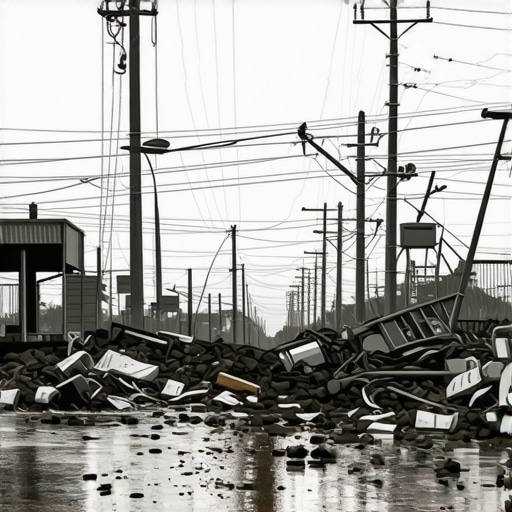
The Reckoning of the Grid: Why Your 2026 Repair Bill Is a Gut Punch
I’ve spent thirty-five years smelling things most people don’t want to think about—burnt PVC, ozone, and the distinct, metallic tang of an energized copper bus bar that’s about to liquidate. If you’re standing in your basement in 2026, looking at a puddle of water near your service panel after the latest atmospheric river, you’re likely staring at a repair bill that looks like a down payment on a luxury car. This isn’t just about inflation; it’s about a perfect storm of crumbling 1940s infrastructure, aggressive new NEC code updates, and the absolute physical reality of what happens when high-voltage systems meet modern moisture. When a storm hits, it doesn’t just trip a breaker; it stress-tests every ‘handyman’ shortcut taken in your home over the last eighty years.
The Flipper’s Ghost: A Forensic Discovery
I walked into a ‘fully renovated’ kitchen last month where the homeowners complained of a persistent ‘fishy smell’ whenever they used the toaster. The flipper had installed a gorgeous marble backsplash, but my Tick Tracer started screaming six inches from the stove where there was no visible outlet. I pulled my Wiggy, confirmed a massive inductive field, and had to tell the owner I was cutting into their $10,000 stone. Behind that marble, I found three live junction boxes buried without covers, the Romex jackets melted into a charred mess. The flipper had used ‘Monkey Shit’ (duct seal) to try and waterproof a connection that should have been in a sealed enclosure. The 2026 storms didn’t cause that fire hazard, but the increased humidity and slight vibration from the wind were the final triggers. When we talk about soarings costs, we’re talking about the forensic labor required to find these hidden ‘widow makers’ before they find you.
“Aluminum wire connections can overheat and cause a fire without tripping the circuit breaker.” – CPSC Safety Alert 516
The Physics of Failure: Why Old Insulation Cannot Survive 2026
In homes built between 1900 and 1950, the electrical system was never designed for the load of a sauna heater installation or a data center power setup. The original wiring—often cloth-wrapped rubber—suffers from what we call ‘insulation brittleness.’ Over decades, the heat of the current dries out the rubber until it’s as fragile as a dried leaf. When a storm causes a minor surge or even just a localized vibration, that insulation flakes off, leaving bare copper. If that wire is a Home Run back to the panel, you now have a localized heater inside your lath-and-plaster walls. This isn’t just a quick fix; it requires a full 200 amp panel install and a complete rewire because modern AFCI breaker services are so sensitive they will trip the moment they detect the micro-arcing typical of old, degraded wire. You can’t just ‘patch’ a system that is fundamentally decomposing.
The Regulatory Squeeze: NEC Code Updates and Permit Pulling Services
The 2026 costs are also driven by the legal requirement to bring entire systems up to date during any major repair. You can’t just replace a storm-damaged mast anymore. Permit pulling services are now mandatory for almost any work involving the service entrance, and once an inspector steps on-site, they’re looking for NEC code updates. This includes Arc-Fault Circuit Interrupter (AFCI) protection on nearly every circuit in the home. If I’m doing a commercial electrical services job or even a residential generator transfer switch install, I am legally bound to ensure the grounding electrode system meets 2026 standards. This often means driving two eight-foot copper rods into the earth and bonding your water, gas, and phone line installation to a single point. It’s a labor-intensive rough-in and trim-out process that adds thousands to the bill, but it’s the only thing that keeps a lightning strike from vaporizing your electronics.
“The National Electrical Code is designed for the practical safeguarding of persons and property from hazards arising from the use of electricity.” – NFPA 70
Infrastructure Context: The 1920s Legacy
For those living in mid-century or earlier homes, the 2026 storms have exposed the ‘bootleg ground.’ In the 1940s, it was common to see a two-prong outlet where someone later jumped the neutral screw to the ground screw to fool a three-prong tester. In a storm surge, that neutral wire carries current. If you have a bootleg ground, that current now resides on the metal chassis of your toaster or your laptop. When you touch it, you become the path to ground. Replacing these with proper grounding, or at minimum, AFCI breaker services, is non-negotiable. Whether it’s pathway lighting install for safety or a heavy-duty 200 amp panel install to handle the modern HVAC loads required by shifting climates, the era of ‘cheap’ electrical work is dead. You pay for the torque, the code-compliance, and the fact that I can sleep at night knowing your house won’t be a headline in the morning paper.