
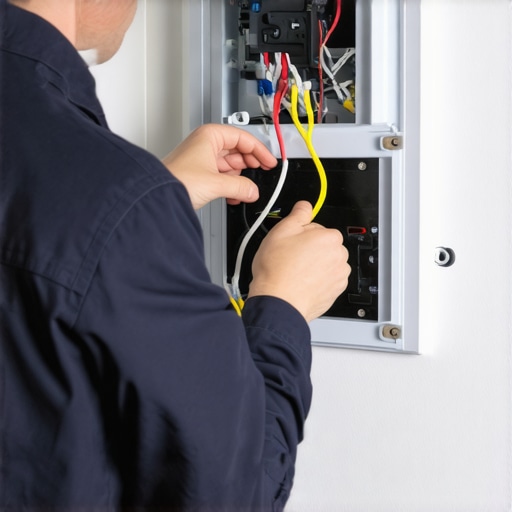
The Autopsy of a Failed Safety Device
I can usually tell a homeowner has been ‘handy’ before I even pull my tool bag out of the truck. There is a specific scent that lingers in a kitchen or a bathroom after a botched electrical job—a cloying, metallic tang of ionized air mixed with the slow-cooker smell of melting PVC. When I walk into a restaurant kitchen electrical setup where the line cooks are complaining about the fridge ‘stinging’ them, I know exactly what I am going to find. Most people treat a GFCI outlet like a standard receptacle with two extra buttons. That ignorance is exactly how houses burn down and why the 2026 inspection cycles are going to fail thousands of DIY projects and cut-rate contractor bids.
My journeyman back in the late eighties, a man who had more scars than fingers, once caught me using a pocket knife to strip back a piece of Romex. He didn’t just yell; he took my side-cutters and threw them across the job site. ‘You nick that copper, kid, you’ve just built a fuse where you wanted a wire,’ he told me. ‘You create a hot spot, the metal thins, the resistance climbs, and by Christmas, that wall is a fireplace.’ He was right then, and he’s right now. Electricity is a lazy, violent force looking for any excuse to jump to ground, and if your GFCI isn’t installed with surgical precision, it’s just a decorative plastic square.
“Ground-fault circuit-interrupters shall be installed in a readily accessible location.” – NEC Article 210.8
1. The Line-Load Reversal: The Silent Killer
The most common failure I see during forensic inspections is the fundamental misunderstanding of the ‘Line’ and ‘Load’ terminals. A GFCI isn’t just a switch; it is a sophisticated monitoring station. The ‘Line’ side is where the power enters from the home run; the ‘Load’ side feeds downstream outlets. If you swap these, the outlet might still provide power, and the little green light might even shine, but the trip mechanism is bypassed. You’ve created a trap. In the 2026 code cycle, inspectors are using sophisticated testers that simulate a 6mA leakage. If that breaker doesn’t pop in milliseconds because you fed the power into the wrong set of screws, you’re looking at a red tag and a mandatory re-inspection fee.
The physics here involve the internal sensing coil. When current flows out through the hot and back through the neutral, the GFCI looks for an imbalance. If even a tiny amount of current leaks out—say, through your arm into a wet kitchen floor—the coil detects the magnetic field difference. By reversing the wiring, you prevent the internal solenoid from physically breaking the circuit. It’s the difference between a seatbelt that locks and one that’s just draped over your shoulder for looks. For those running tiny home wiring or ADU electrical services, space is tight and wires get crossed easily. One mistake here makes the entire branch circuit a liability.
2. High-Impedance Neutrals and Bootleg Grounds
I recently performed a power quality analysis on a flood-damaged property where the owner had tried to save a buck. They had ‘bootlegged’ the ground—connecting the neutral screw to the ground screw because the old wiring didn’t have a dedicated green wire. In 2026, this is an automatic failure. We call this the ‘Widow Maker.’ Under normal conditions, it seems fine. But if that neutral wire ever breaks upstream, every metal surface connected to that circuit—your toaster, your fridge, your pendant light hanging over the sink—becomes live at 120 volts.
In high-moisture environments like a restaurant kitchen or areas prone to flood water electrical safety issues, a bootleg ground is a death sentence. The GFCI needs a clean reference to function. If you’re dealing with a service entrance upgrade on an older home, you cannot skip the grounding electrode system. I’ve seen guys use ‘Monkey Shit’ (duct seal) to hide corroded wires, but you can’t hide a high-impedance path from a Wiggy or a modern digital multimeter. The resistance in the circuit causes heat, and heat leads to the ‘Cold Creep’ of the wire, where the copper expands and contracts until the screw terminal loses its torque, creating an arc fault that a standard GFCI wasn’t even designed to stop.
“Aluminum wire connections can overheat and cause a fire without tripping the circuit breaker.” – CPSC Safety Alert 516
3. Failure to Account for Harmonic Distortion and Ghost Voltages
We are moving into an era of ‘dirty’ power. With all the LED drivers, EV chargers, and high-frequency appliances in modern homes, the 2026 inspections are getting stricter about nuisance tripping and power quality. If you are installing an attic fan installation or complex ADU electrical services, you have to understand shared neutrals. If two circuits share a neutral (a multi-wire branch circuit) and you try to put a GFCI on one of them, it will trip every time the other circuit turns on. This isn’t a faulty device; it’s a failure of the installer to understand Kirchhoff’s Circuit Laws.
I’ve walked into jobs where the ‘electrician’ used a tick tracer and thought the line was dead, only to get blasted by a ghost voltage from a shared neutral. You have to use a low-impedance meter to verify your lines. When we do annual maintenance contracts, we check for these thermal signatures. A loose neutral in a panel can cause voltages to swing wildly—one leg drops to 90 volts while the other spikes to 150. Your GFCI’s internal Silicon-Controlled Rectifier (SCR) will fry under those conditions. It’s why I always recommend a service entrance upgrade if you’re adding modern loads; your 1970s bus bars weren’t built for the harmonic feedback of a 2025 lifestyle.
4. Improper Enclosure Ratings in Harsh Environments
Whether it’s salt air on the coast or steam in a commercial wash-down area, the physical housing of the GFCI is where many fail the 2026 standard. You cannot use a standard ‘dry-rated’ device in a location subject to moisture. The internal components of a GFCI are incredibly delicate—tiny springs and silver-alloy contacts that can corrode in months if exposed to salt or high humidity. For restaurant kitchen electrical or outdoor tiny home wiring, you must use Weather-Resistant (WR) rated devices. These have stainless steel internal parts and UV-stabilized plastics.
When I do a forensic dive into a failed outdoor outlet, I often find the ‘Dikes’ (diagonal cutters) weren’t used to properly trim the wires, leaving long copper tails that touch the back of the metal box. Or worse, the installer didn’t use a proper gasket. Moisture enters, creates a bridge between the hot terminal and the ground, and the device fails to trip because the internal mechanism is literally rusted shut. If you are looking for free electrical estimates, make sure the pro mentions WR and TR (Tamper Resistant) ratings. If they don’t, they are cutting corners that will cost you your home or your life. Don’t play games with the 2026 codes; they are written in the blood of people who thought they knew what they were doing.
The Final Torque: Why it Matters
At the end of the day, an inspection failure is a gift—it means you didn’t have a fire yet. Whether you are upgrading for a pendant light hanging project or a full-scale restaurant overhaul, the torque on those terminal screws matters. We use calibrated torque screwdrivers now because ‘hand-tight’ is a lie. If that connection isn’t at the specified inch-pounds, it will fail. Electricity is the most dangerous thing in your house. Treat it with the respect it demands, or it will find a way to remind you why I’ve spent 35 years being paranoid. Sleep easy—get it inspected, get it torqued, and get it right.