
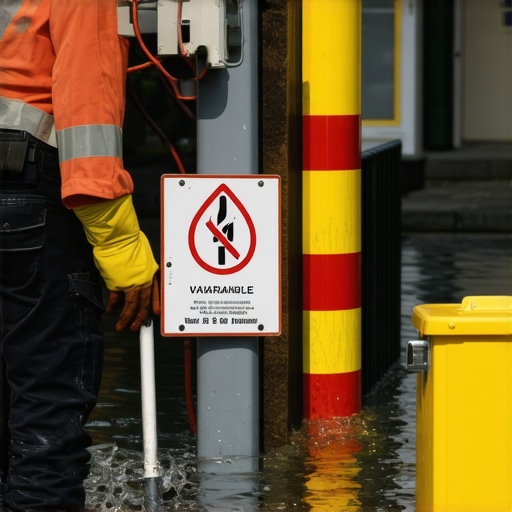
The Autopsy of a Saturated System
I’ve spent 35 years pulling wire and tracing shorts, and if there is one thing I’ve learned, it’s that water doesn’t just sit in your basement—it migrates. I walked into a ‘fully renovated’ split-level last year after a major storm surge. The flipper had replaced the drywall and the baseboards, making the place look like a Pinterest board. But when I pulled a single-gang device from the wall, the copper wasn’t shiny. It was weeping a viscous, green slime. The flipper had buried live junction boxes that had been submerged in three feet of brackish water, thinking that once it ‘dried out,’ it was safe. I found those hidden fire hazards with my tracer, and the homeowner nearly fainted when I showed them the charred tracking marks on the back of the device. That flipper didn’t just cut corners; they built a funeral pyre.
“Aluminum wire connections can overheat and cause a fire without tripping the circuit breaker.” – CPSC Safety Alert 516
The Physics of the Wick: Why Submersion is a Death Sentence
When your electrical system meets floodwater, you aren’t just dealing with H2O. You are dealing with a slurry of contaminants, salts, and chemicals that turn your home’s wiring into a series of electrolytic cells. Let’s talk about Romex (NM-B cable). Inside that outer jacket is a paper filler. Once water hits the end of a cable or a nick in the jacket, that paper acts as a wick. Capillary action pulls the water inches, sometimes feet, up into the cable. Even if the outside looks dry, the internal environment is a petri dish for oxidation. The copper begins to corrode, creating a layer of resistance. In the electrical trade, resistance equals heat. By the time you’re doing your rough-in for a repair, that compromised wire is already a ticking time bomb.
Step 1: The Virtual Triage and Remote Diagnostics
In 2026, we don’t just go running into a wet basement with a Wiggy and a prayer. The first step is virtual consultation wiring assessments. Before any boots hit the mud, a forensic inspector can use remote thermal imaging and high-resolution video to identify obvious hot spots or compromised home run lines. If you see a circuit breaker that won’t reset, do not—under any circumstances—force it. That’s the internal mechanism telling you there’s a dead short. We use remote electrical diagnostics to map the impedance of the circuits. If the resistance readings are off the charts, the insulation has failed. You wouldn’t trust a doctor who doesn’t take an X-ray; don’t trust an electrician who doesn’t use a megohmmeter to test insulation integrity after a flood.
Step 2: The Standby Generator and Transfer Switch Protocol
During a flood, the grid often goes dark. This is when people get desperate and do stupid things with portable generators. I’ve seen ‘suicide cords’—male-to-male plugs—that turn a whole house into a widow maker. For 2026, a standby generator install is the only professional way to handle power outages. But here is the forensic catch: the transfer switch must be located above the 100-year flood line. If that switch gets submerged, the contactors can weld together. This creates a backfeed situation that can kill a utility worker three blocks away. We ensure every standby generator install includes a service-rated disconnect that is physically unreachable by rising tides. We don’t just install for the power; we install for the isolation.
“A circuit breaker or fuse is not designed to protect against the hazards of a submerged electrical system.” – NFPA 70E Standard for Electrical Safety
Step 3: Component Zooming—The Forensic Failure of Devices
Let’s look at the humble outlet. Most people think if it’s dry, it’s fine. Wrong. Inside a standard receptacle, the spring tension of the brass contacts is what keeps your plug tight. Floodwater, especially if it’s coastal salt air, initiates galvanic reaction. The salt bridges the gap between the hot and neutral terminals. Even after the water recedes, the salt crystals remain. These crystals are conductive. You get what we call ‘tracking’—a low-level arc that doesn’t always trip a standard breaker but generates enough heat to melt the plastic housing. This is why same day service appointments are critical for replacing every single device that took a dip. We don’t ‘clean’ outlets; we cut them out with dikes and trash them.
Step 4: The Permit and the Permanent Solution
I’ve seen homeowners try to dodge permit pulling services to save a few hundred bucks. In 2026, that’s a recipe for a denied insurance claim. When we do a cloth insulated wiring replacement after flood damage, we are looking for more than just functionality. We are looking for code compliance that survives the next decade. If your home still has cloth insulated wiring, water is its natural enemy. The organic fibers rot instantly, leaving the energized copper exposed. We pull the permits, we bring in the city inspector, and we ensure the data center power setup in your home office or the emergency exit lighting in your multi-family unit is documented. This isn’t just about safety; it’s about the legal chain of custody for your home’s electrical health.
When to Call for Backup
If you’re smelling ozone—that sharp, metallic scent that hits you in the back of the throat—get out. That’s the smell of air being ionized by an arc. Whether you need recessed lighting installation to replace water-damaged cans or weekend electrician services for an emergency panel swap, do not DIY this. I’ve spent too many years seeing what happens when a tick tracer gives a false negative and someone grabs a live 240-volt line. We use monkey shit (duct seal) to plug conduits and prevent water from traveling between floors, but the real protection comes from a professional who knows how to torque a lug to the inch-pound. Stay dry, stay grounded, and for god’s sake, keep your hands out of the panel.